Choosing the right Folding Shelves is rarely as simple as selecting the highest weight rating. Global buyers face different room sizes, climates, shipping conditions, and installation habits. A shelf that performs well in a dry warehouse may struggle in a humid coastal home. Small details matter, including hinge strength, locking pins, wheel quality, surface coating, and folded depth.
Storage systems consultant Dr. Elena Morris says, “The best folding shelf is not the largest one; it is the one that remains stable, useful, and easy to move in its real environment.” Her observation gives this comparison a practical direction. We will examine Folding Shelves through everyday use, not attractive photographs alone. Each option deserves attention to load distribution, setup time, portability, maintenance, and long-term value.
Some conclusions may remain imperfect. Product specifications do not always reflect crowded rooms, uneven floors, or careless handling. That is worth admitting. A compact shelf may seem weaker, yet it can be more practical for apartments and small shops. A heavy-duty model may carry more weight, but transportation becomes harder and more expensive. We will also consider packaging quality and after-sales support, because international purchases involve more than the shelf itself. The goal is not to name one universal winner. It is to identify which Folding Shelves suit particular buyers, spaces, and working conditions. Real usefulness comes first.
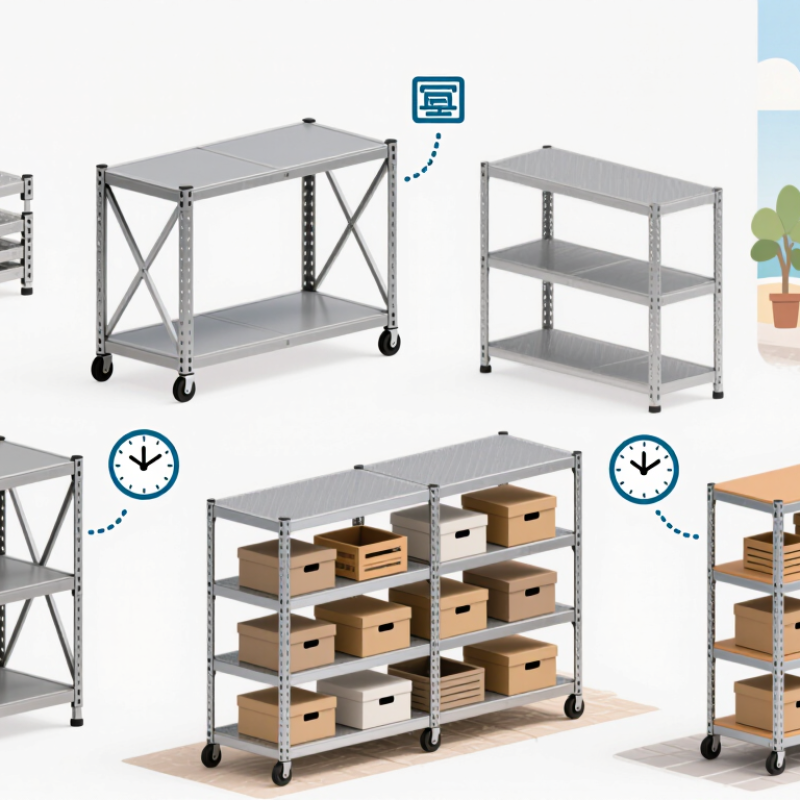
Folding shelves are storage units designed to open for use and collapse for transport or storage. They use hinged joints, pivoting brackets, or sliding supports. When opened, these parts form a stable frame under each shelf. When folded, the frame becomes flatter and easier to carry. No electrical power is needed. A locking pin or latch usually prevents accidental movement. In practice, the frame must sit evenly on the floor. That detail matters.
A reliable shelf should match its intended load, room, and climate. Steel frames resist bending, while wood or plastic panels offer different levels of weight support. Moisture can weaken untreated materials and cause swelling. Buyers should check the maximum load for each shelf, not only the total capacity. A shelf rated for 50 kilograms may require the weight to be evenly distributed. Assembly instructions should explain locking points clearly. Small errors happen. Before placing books or tools, test the shelf with light items. This reveals loose hinges or uneven legs.
For global buyers, folded dimensions affect shipping costs and warehouse space. Confirm the package size, net weight, and required tools before ordering. A compact unit may still need protective corner packaging. Different markets may also use different plug-free designs, safety labels, or material requirements. Do not rely only on product photographs. Ask for a load diagram, material details, and corrosion information. Product pages sometimes show ideal conditions, not uneven floors. A clear drawing can prevent expensive misunderstandings.
Folding shelves use hinges or folding brackets to support a horizontal surface during use and reduce the shelf projection when folded. The chart compares usable surface area for different shelf depths using a constant 600 mm shelf width.
Usable surface area is calculated as shelf width × working depth. For a 600 mm-wide shelf, a deeper design provides more storage space but requires more wall clearance when open. Actual load capacity depends on the material, hinge design, bracket configuration, wall structure, and installation method.
For global buyers, the best folding shelf depends on the storage problem, not its appearance. A narrow, wall-mounted model suits kitchens, bathrooms, and small retail rooms. It keeps floor space clear and folds flat when cleaning is needed. Measure the wall, hinge area, and loaded depth before ordering. Check twice. Moisture-resistant steel or sealed plastic is safer for humid rooms, but finishes still need inspection. Looks can mislead.
Freestanding folding shelves work better in rental homes, workshops, and temporary displays. Choose adjustable tiers for mixed items such as boxes, tools, and folded textiles. A compact two-tier shelf handles light goods, while reinforced frames suit heavier containers. Check the stated load per tier, not only the total capacity. Keep it level. Uneven floors can twist the frame and reduce stability. In my own storage tests, shelves often failed because items were placed too far forward.
For books, pantry jars, or office supplies, tiered shelves improve visibility and reduce repeated searching. Locking wheels help when the shelf must move, though they add height and cost. A collapsible fabric shelf is convenient for clothing, but it is less suitable for sharp tools or damp goods. Buyers should compare folded dimensions, hinge quality, edge protection, and replacement hardware availability. Product photos can hide thin joints. I still question whether the lightest design is truly economical after frequent opening and closing.
Material choice often decides whether a folding shelf survives daily use. Powder-coated steel offers strong support and resists ordinary scratches. Aluminum weighs less and performs well in humid rooms, but it may bend under heavy point loads. Sealed plywood can provide a warmer appearance, although exposed edges may absorb moisture.
I have seen attractive shelves fail because water reached an unprotected joint. Material thickness, surface treatment, and edge sealing deserve closer inspection than appearance.
A quality folding shelf should use firm hinges, secure locking braces, and stable feet. The locking system must remain engaged when the shelf carries uneven items. Non-slip pads reduce movement on tile, concrete, or polished floors.
Rounded corners also matter in busy homes and commercial spaces. Ask for the tested load rating, not only the maximum marketing number. Static and moving loads are different. A rating without a test method makes me cautious.
Global buyers should check folded dimensions, package protection, replacement hardware, and assembly instructions. Humid climates may need extra corrosion protection. Cold storage areas can make some plastics brittle.
Small details matter. Suppliers that provide material specifications, inspection records, and clear warranty terms show stronger professional reliability.
Still, no shelf suits every environment. I would test one unit before ordering widely, because real floors are rarely as level as product photos suggest.
Top Folding Shelves: Which One Is Best for Global Buyers?
Global buyers should compare folding shelf performance through measured evidence, not attractive photographs. Start with working load, folded thickness, opening cycles, and locking stability. Ask whether the stated load applies to one shelf or the complete unit. That distinction matters. ISO 7170 provides recognized methods for testing storage-unit strength, durability, and stability. However, suppliers may use different fixtures and loading positions. Request the full test method, sample condition, and failure record. A shelf holding 50 kilograms at its center behaves differently from one holding the same weight near its edges.
Transport performance deserves equal attention. The Pitney Bowes Parcel Shipping Index recorded 161.1 billion parcels worldwide in 2022. Folding products therefore face repeated handling, vibration, and compression before installation. Compare carton drop-test results, corner protection, hardware retention, and moisture resistance. The DHL 2024 E-Commerce Trends Report found that 70% of consumers expect to shop mainly online by 2030. Packaging damage can quickly become a return-cost problem. Check whether the folded shelf opens without scraping, binding, or sudden release. Small defects matter.
Buyers should also inspect corrosion testing, surface adhesion, and replacement-part availability. ISO 9227 can define a salt-spray test method, but it does not guarantee real-world service life. Do not guess. In my own inspections, visual quality sometimes overstated structural quality. A better comparison uses three samples, repeated opening cycles, and documented measurements. Results should include tolerances, not only the best reading. Performance can vary between production batches.
Top Folding Shelves: Which One Is Best for Global Buyers?
Shipping damage often begins before the container leaves port. The World Shipping Council’s Containers Lost at Sea 2023 report recorded 221 lost containers from nearly 250 million transported. Buyers should therefore inspect carton strength, corner protection, moisture barriers, and pallet stability. Folding shelves with compact packaging usually reduce freight volume, but thin panels may bend under compression. Ask for drop-test records, load-distribution data, and photographs of packed units. Small details matter.
Safety depends on more than the stated load rating. OSHA identifies falling objects, unstable storage, and manual-handling injuries as major warehouse hazards. Shelves need positive locking hinges, non-slip feet, rounded edges, and clear capacity labels. ISO 12100 risk-assessment principles also support evaluating foreseeable misuse, such as uneven floors or overloaded tiers. A shelf rated for 100 kilograms may fail sooner when weight sits near one edge. Measure twice. Test realistically.
Maintenance requirements can vary across climates. The World Bank’s Logistics Performance Index 2023 shows substantial differences in customs, infrastructure, and shipment reliability between markets. Buyers should select finishes that resist humidity, salt air, and temperature changes. Inspect hinges, fasteners, welds, and locking pins every few months. Replace damaged parts, rather than improvising repairs. I would not trust a perfect laboratory rating alone; real warehouses are dusty, rushed, and imperfect. Records of inspection dates and corrective actions improve accountability.
| Folding Shelf Type | Typical Material | Typical Open Size | Typical Load Capacity per Shelf | Folded Shipping Profile | Shipping Advantages | Key Safety Factors | Maintenance Requirements | Best-Suited Applications | Overall Suitability for Global Buyers |
|---|---|---|---|---|---|---|---|---|---|
| Light-Duty Wire Folding Shelf | Powder-coated carbon steel wire | Approximately 600–900 mm wide × 300–450 mm deep × 900–1,500 mm high | Approximately 30–75 kg per shelf when evenly distributed | Flat-folding frame; usually reduces height by about 60–80% | Low product weight, compact storage, and efficient carton utilization | Use on a level surface; confirm that locking braces are fully engaged; avoid concentrated loads on wire sections | Wipe regularly; dry immediately after cleaning; inspect coating for chips or rust, especially in humid or coastal regions | Retail displays, light warehouse storage, trade shows, offices, and home organization | Best for low shipping cost and frequent setup |
| Heavy-Duty Steel Folding Rack | Powder-coated or galvanized steel frame and shelves | Approximately 900–1,200 mm wide × 450–600 mm deep × 1,200–1,800 mm high | Approximately 100–250 kg per shelf when evenly distributed | Folded frame remains relatively heavy; reinforced parts may increase carton volume | High durability and strong protection against deformation during normal handling | Load limits must be followed; place heavier goods on lower shelves; use wheel brakes or anti-tip accessories where supplied | Check bolts, hinges, braces, and weld areas periodically; remove moisture and repair exposed metal promptly | Warehouses, workshops, commercial storage, event equipment, and stockrooms | Best for high load capacity and long service life |
| Plastic Resin Folding Shelf | High-impact polypropylene or high-density polyethylene panels with a metal or polymer frame | Approximately 600–900 mm wide × 300–450 mm deep × 900–1,500 mm high | Approximately 20–60 kg per shelf, depending on panel thickness and support design | Very light; panels may fold or nest efficiently inside cartons | Low shipping weight, corrosion resistance, and suitability for humid environments | Keep away from excessive heat and open flame; prevent overloading that may cause panel deflection | Clean with mild soap and water; avoid abrasive chemicals; inspect panels for cracks after impact or cold-weather transport | Garages, kitchens, temporary storage, hospitality areas, and humid climates | Best for corrosion resistance and easy handling |
| Aluminum Folding Shelf | Extruded or formed aluminum frame with aluminum or composite shelves | Approximately 600–1,000 mm wide × 350–500 mm deep × 900–1,600 mm high | Approximately 40–100 kg per shelf when evenly distributed | Lightweight but may require protective corner packaging to prevent dents | Lower freight weight than steel and good resistance to ordinary atmospheric corrosion | Check for sharp edges, loose hinges, and frame twisting; avoid exceeding the rated load because aluminum can deform permanently | Use a soft cloth and neutral cleaner; avoid harsh alkaline or acidic products that can damage the surface finish | Outdoor events, food-service support, mobile workstations, and humid environments | Best for low weight with moderate load requirements |
| Wood-Composite Folding Shelf | Melamine-faced particleboard, plywood, or medium-density fiberboard with a folding metal frame | Approximately 600–1,200 mm wide × 300–500 mm deep × 700–1,500 mm high | Approximately 25–80 kg per shelf when evenly distributed | Panels can increase carton dimensions and require edge protection | Stable flat surfaces and good appearance for retail or indoor presentation | Protect from standing water; ensure the frame is locked before loading; do not use damaged or swollen panels | Dust with a dry or slightly damp cloth; keep edges dry; inspect for swelling, delamination, and loose fasteners | Indoor retail, exhibitions, offices, libraries, and household storage | Best for appearance and flat-surface storage indoors |
| Rolling Folding Shelf | Steel or aluminum frame with locking casters | Approximately 700–1,200 mm wide × 400–600 mm deep × 1,000–1,800 mm high | Approximately 50–150 kg per shelf, subject to wheel and frame ratings | Wheels and handles add packing volume; folded height depends on caster design | Reduces handling labor after delivery and can be moved without repeated lifting | Lock all casters before loading or using; push rather than pull when possible; avoid uneven floors and sudden impacts | Clean caster tracks; check wheel fasteners and brakes; lubricate compatible moving parts according to the instructions | Warehouses, offices, catering, classrooms, and temporary event storage | Best for mobility and repeated repositioning |
Buyer’s data note: The dimensions, load capacities, and folded profiles shown above are typical market ranges for comparable folding shelving designs, not universal specifications. Actual performance depends on material thickness, shelf support spacing, locking mechanisms, packaging, floor conditions, and the manufacturer’s tested rating. Before purchase, request a carton specification, gross and net weight, load test report, assembly or operating instructions, corrosion-finish details, and destination-country safety documentation.
Compare working load, folded thickness, opening cycles, and locking stability. Ask whether the load applies to one shelf or the whole unit. This matters.
A shelf holding 50 kilograms centrally may behave differently near its edge. Test both positions. Real storage is rarely perfectly balanced.
Request repeated-cycle results using three samples. Record scraping, binding, sudden release, and hinge movement. Best readings alone can mislead.
Check carton strength, corner protection, moisture barriers, and pallet stability. Ask for drop-test photographs and packed-unit records. Thin panels may bend.
Compact packaging can reduce freight volume. However, compression may damage thin panels or locking hardware. Measure both savings and protection.
Look for positive locking hinges, non-slip feet, rounded edges, and clear capacity labels. Test uneven floors and overloaded tiers. Do not rely on labels alone.
Inspect hinges, fasteners, welds, and locking pins every few months. Choose finishes suited to humidity, salt air, and temperature changes. Dust matters.
Request corrosion-test methods, surface-adhesion results, and sample conditions. Laboratory testing cannot guarantee service life. I would still inspect real warehouse samples.
Replacement hinges, pins, and fasteners can extend useful life. Replace damaged parts instead of improvising repairs. Improvised fixes can create hidden weakness.
Record inspection dates, load conditions, defects, and corrective actions. Include production batch details and measurement tolerances. Perfect records are difficult, but useful.
Folding Shelves are adaptable storage solutions designed to provide convenient organization while saving space when not in use. Their foldable structure allows users to open, adjust, collapse, or relocate them according to changing storage needs. Different types may be suitable for homes, offices, retail areas, warehouses, kitchens, or temporary displays, depending on load capacity, shelf size, mobility, and installation method. Buyers should consider whether they need freestanding, wall-mounted, wheeled, or multi-tier designs.
A quality folding shelf is usually defined by durable materials, stable joints, reliable locking mechanisms, smooth surfaces, and practical weight support. Global buyers should compare product dimensions, load performance, ease of assembly, corrosion resistance, safety features, packaging quality, and compatibility with local usage conditions. Shipping considerations include flat-pack efficiency, protection against damage, clear instructions, and dependable delivery arrangements. Regular maintenance should include checking fasteners, cleaning surfaces, inspecting hinges, and avoiding loads beyond the recommended capacity to ensure safe and long-lasting use.

CrownRacking