Choosing China’s top Floor Stand Displays manufacturers requires more than comparing glossy catalogs and low quotations. In practical retail sourcing, a display must survive transport, store handling, and repeated customer contact. A stable steel frame, clean welds, accurate shelving, and durable powder coating can matter more than a striking product photo. This guide introduces manufacturers that deserve closer evaluation, while recognizing that “top” depends on each buyer’s needs.
The review focuses on factory experience, design capability, production capacity, and quality controls. It considers whether suppliers provide CAD drawings, prototypes, material specifications, load testing, and realistic lead times. Packaging also matters. A display arriving with scratched panels or bent hooks is not a successful order. Ask for inspection records, sample approvals, export experience, and clear after-sales communication. Certifications should be checked against the actual product, not simply copied from a website.
Some suppliers excel at supermarket gondolas. Others are stronger in cosmetics, electronics, or promotional units. There is no universal winner. A polished website proves little. Factory videos can help, but independent verification remains valuable. Buyers should compare minimum order quantities, customization limits, replacement policies, and shipping terms before signing any agreement. My judgment may favor dependable execution over the lowest price, though that preference is not perfect for every project. The best manufacturer is the one that matches design goals, budget, timeline, and expected service life. Small details often decide the result.
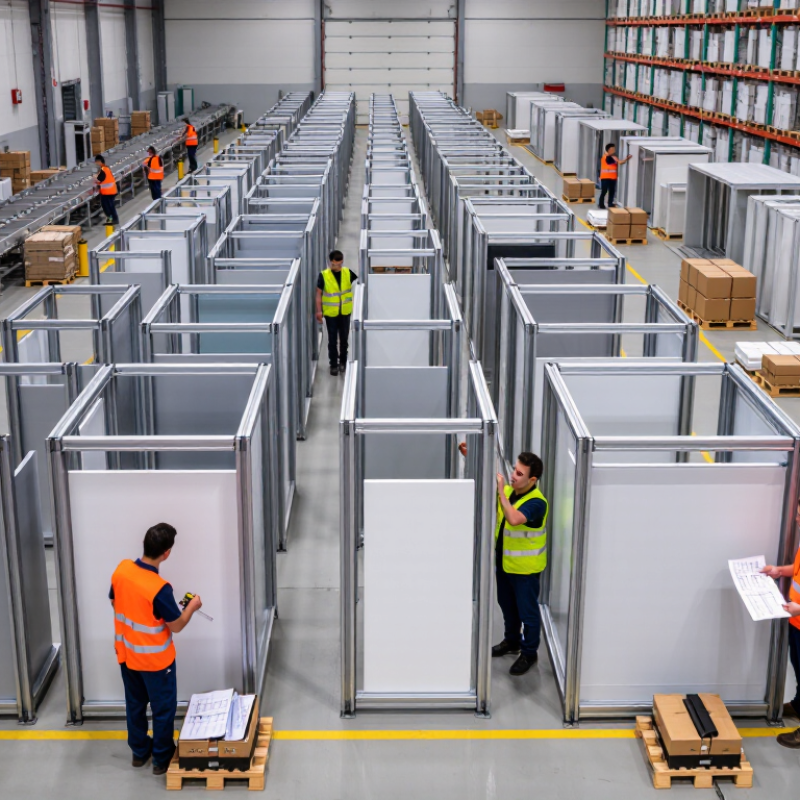
China Top Floor Stand Displays Manufacturers?
Definition and Role of Floor Stand Displays in Retail
A floor stand display is a freestanding retail unit placed beside aisles, entrances, or checkout areas. It holds products at eye level and guides shoppers toward a clear purchase action. Unlike fixed shelving, it can create a temporary selling zone. It may also support seasonal campaigns, product launches, and small-space merchandising.
Its value is measurable, though not always dramatic. The POPAI Mass Merchant Shopper Engagement Study reported that about 76% of purchase decisions were made in stores. More recently, Grand View Research estimated the global retail display market at over USD 18 billion in 2023. These figures show why physical presentation still matters. However, a crowded stand can weaken attention. More graphics do not always mean more sales.
Tips: Keep the message readable from three meters away. Use stable materials, rounded edges, and easy product access. Match the stand’s height with shopper sightlines. Test one layout in a real store before producing thousands. Store lighting, aisle width, and staff habits can change performance. This practical test is often missed. Manufacturers should provide load testing, installation guidance, and recyclable material options. Retailers should track sales before and after placement, not rely only on appearance.
| Data Dimension | Typical or Standard Information | Retail Role and Practical Importance |
|---|---|---|
| Definition | A freestanding retail fixture designed to present products, promotional messages, or product information without requiring wall or shelf installation. | Creates a dedicated merchandising location and increases product visibility in high-traffic areas. |
| Common Display Height | Approximately 1,200–2,000 mm, depending on product category, viewing distance, and store regulations. | Places product messages within the normal standing sightline while preserving visibility across the sales floor. |
| Common Width | Approximately 400–1,000 mm for compact promotional units and larger multi-shelf merchandising systems. | Allows retailers to select a footprint that fits aisles, entrances, checkout zones, and promotional areas. |
| Common Depth | Approximately 250–600 mm, with deeper bases used for heavier or higher-volume merchandise. | Balances product capacity and stability against the need to maintain customer circulation space. |
| Typical Construction Materials | Powder-coated steel, stainless steel, aluminum, corrugated cardboard, MDF, acrylic, PVC, or combinations of these materials. | Material selection affects load capacity, durability, appearance, cost, transport weight, and recyclability. |
| Main Structural Components | Base, vertical frame, shelves or hooks, header panel, back panel, side panels, product dividers, and optional wheels. | Modular components make the unit easier to assemble, restock, reconfigure, and adapt to different products. |
| Product Loading Method | Shelves for boxed goods, hooks for hanging products, baskets for loose items, or a combination of formats. | The correct loading method improves product organization, shopper access, and replenishment speed. |
| Typical Product Categories | Packaged food, beverages, cosmetics, personal care items, toys, electronics accessories, books, apparel accessories, and seasonal products. | Supports both impulse purchases and planned purchases when the display is positioned near relevant customer traffic. |
| Primary Placement Areas | Store entrances, aisle ends, checkout areas, promotional zones, waiting areas, and locations adjacent to complementary products. | Placement near decision points can attract attention and support cross-selling or promotional campaigns. |
| Branding Area | Header boards, side panels, shelf strips, printed graphics, product information cards, and digital screens. | Provides space for product benefits, pricing, usage instructions, promotional messages, and visual identification. |
| Mobility Options | Fixed leveling feet for stability or lockable casters for repositioning and seasonal layout changes. | Mobile designs reduce relocation effort, while fixed designs generally provide stronger resistance to movement. |
| Load Capacity Consideration | Must be determined by the frame, shelf material, shelf span, base design, and the weight distribution of the products. | Correct load planning reduces tipping, shelf deformation, product damage, and safety risks. |
| Assembly Format | Knock-down structures, bolt-on frames, snap-fit cardboard units, or pre-assembled fixtures. | Knock-down formats reduce shipping volume, while pre-assembled units can shorten installation time. |
| Common Display Types | Multi-tier shelf display, pegboard display, slatwall display, rotating display, wire display, cardboard display, and digital display tower. | Different formats accommodate different product sizes, shopping behaviors, inventory levels, and campaign durations. |
| Short-Term Campaign Suitability | Cardboard and lightweight modular displays are commonly used for seasonal, promotional, and limited-duration campaigns. | Enables quick deployment and lower transport requirements when long-term durability is not the primary objective. |
| Long-Term Campaign Suitability | Metal, wood-based, and reinforced modular fixtures are better suited to repeated use and permanent retail environments. | Durable construction can support repeated replenishment, cleaning, relocation, and multi-season use. |
| Key Selection Criteria | Available floor space, product dimensions, product weight, expected stock level, campaign duration, assembly requirements, and store safety rules. | A well-matched display improves operational efficiency while reducing unnecessary space, material, and maintenance costs. |
| Core Retail Benefits | Improved product visibility, flexible placement, increased merchandising capacity, clearer product communication, and easier campaign changes. | Floor stand displays help retailers use open floor space as an active merchandising and communication channel. |
It is a freestanding retail unit placed near aisles, entrances, or checkout areas. It presents products at eye level. It can create a temporary selling zone.
Place it where shoppers naturally slow down, such as aisle ends or entrances. Keep it outside crowded walking paths. Store conditions matter.
Use one clear message and readable text from about three meters away. Avoid filling every surface with graphics. More decoration may weaken attention.
Check steel thickness, board density, coating quality, and shelf weight limits. Look for rounded edges and stable feet. Test wheels if the unit is movable.
Request factory videos, material certificates, load-test records, and recent inspection reports. Ask about carton strength and assembly time. Photographs are not enough.
A pilot sample reveals weak welds, sharp edges, poor color, or difficult assembly. Test it in a real store. Test it twice.
Measure packed size, shipping volume, installation labor, and expected replacement rates. Record acceptable cutting and printing tolerances. Small defects multiply quickly.
Ask for documented recycled content and material details. Consider recyclable construction and reduced packaging. Vague claims need evidence.
Compare sales before and after placement. Track product access, shopper movement, and staff feedback. Appearance alone can mislead.
They may trust a polished sample too quickly. Inconsistent cutting or weak packaging can appear during production. Suppliers should report problems early and show corrective evidence.
Floor Stand Displays are versatile retail fixtures designed to present products at eye level while improving store organization, visibility, and customer engagement. This article explores the main types manufactured in China, including freestanding shelves, rotating towers, brochure stands, display racks, and customized promotional units. Each format can be selected according to product size, retail environment, capacity, mobility, and branding requirements.
It also explains how to evaluate Chinese manufacturers by reviewing production experience, quality control, communication, lead times, sampling processes, and export capabilities. Key considerations include manufacturing standards, material choices such as metal, wood, acrylic, and cardboard, as well as finishing, printing, lighting, modular structures, and other customization options. By comparing these factors with budget, order volume, design complexity, and after-sales support, buyers can select a reliable China-based display manufacturer capable of delivering durable, attractive, and practical retail solutions.

 CrownRacking