What Are Pegboard Displays Used For?

Time:2026-10-20 Author:Sienna
0%

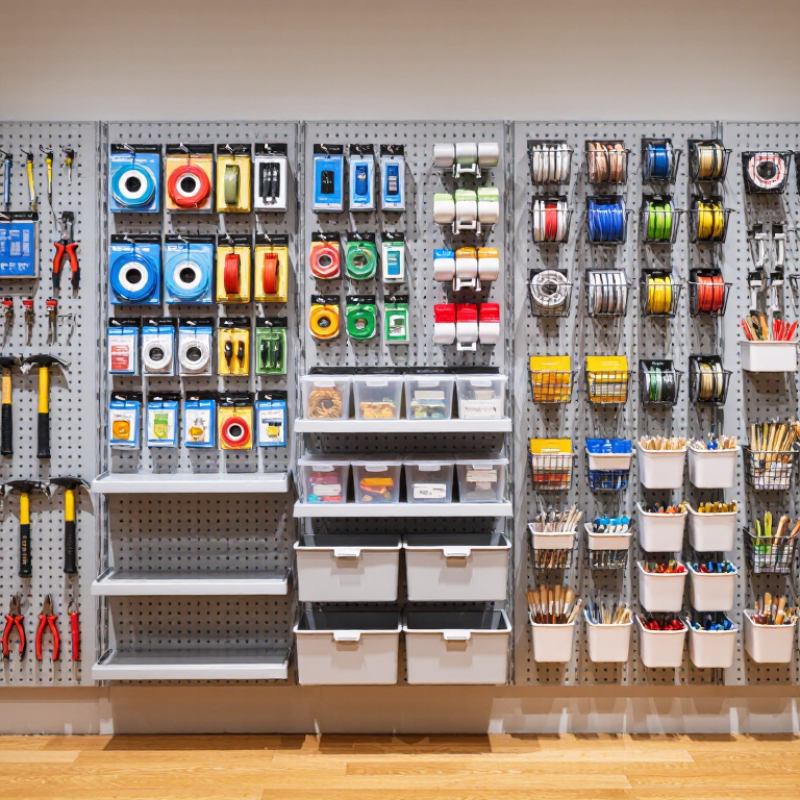
Pegboard Displays are practical merchandising systems built around a perforated panel and adjustable accessories. They help retailers present products clearly while using limited wall space. Hooks, shelves, baskets, and brackets can support different product sizes. This flexibility makes them useful in stores, trade show booths, workshops, studios, and stockrooms.

In a retail setting, a pegboard can hold packaged tools, cables, stationery, craft supplies, or small hardware. Customers can see product fronts without opening crowded boxes. Staff can move hooks as inventory changes. That simple adjustment may reduce visual clutter and make restocking easier. In exhibitions, branded panels create organized backdrops for samples and literature. In workshops, they keep frequently used tools within reach. The result is often faster access and a more consistent workspace.

Good performance depends on planning, not appearance alone. The panel must match the wall, product weight, and expected handling. Heavy items may require stronger fixtures and secure installation. Spacing also matters. Too much empty space looks unfinished, while tight placement makes products difficult to remove. Pegboard Displays are not a universal solution. Some products need locked cabinets, deeper shelving, or protection from dust. Their value comes from thoughtful arrangement, safe loading, and regular review. A display may look attractive on opening day, yet become confusing after new stock arrives. This guide examines practical uses, design choices, and common limitations, helping readers choose a system that serves both customers and staff.
What Are Pegboard Displays Used For?

Definition and Basic Structure of Pegboard Displays

What Are Pegboard Displays Used For?

Definition and Basic Structure of Pegboard Displays

A pegboard display is a perforated panel designed to hold merchandise with removable accessories. Its regular holes accept hooks, shelves, baskets, and brackets. The board may use painted steel, hardboard, wood, or composite material. The structure is straightforward: a vertical panel, a supporting frame, and load-bearing attachments. The board is simple.

In retail fixture planning, pegboards help present small products at eye level. Hand tools, stationery, craft supplies, cables, and packaged accessories often fit this format. Hooks create rows without deep shelving. Baskets can hold loose items. Adjustable parts also support frequent layout changes. A poorly spaced display, however, can look crowded and reduce product visibility.

Industry data explains why physical presentation still matters. The U.S. Census Bureau reported that e-commerce represented 16.1% of total U.S. retail sales in the fourth quarter of 2024. Most retail activity still involved physical channels. The National Retail Federation forecast 2024 U.S. retail sales at approximately 5.23 to 5.28 trillion dollars. These figures support continued investment in organized store fixtures.

A reliable pegboard installation needs more than attractive spacing. Planners should check panel thickness, fastener strength, wall capacity, and the rated load of every accessory. Heavy products need lower positions and stronger brackets. Small details matter. One limitation deserves attention: pegboards can become visually repetitive. Clear grouping, varied shelf depths, and readable labels often prevent that problem.

Common Retail and Commercial Applications

What Are Pegboard Displays Used For?

Common Retail and Commercial Applications

Pegboard displays help retailers organize products while using vertical wall space efficiently. They are common in hardware shops, craft stores, pharmacies, and small showrooms. Hooks can hold packaged tools, cables, accessories, or lightweight equipment. Shelves can present boxed items, samples, and seasonal merchandise at eye level.

Commercial spaces use pegboards beyond retail. Workshops display frequently used tools near workstations. Offices organize supplies beside shared printers or packing tables. Trade counters can show product samples without filling the floor with cabinets. In practice, adjustable fittings make pegboards useful when product sizes change. However, a neat wall can still perform poorly if labels are unclear or popular items sit too high. That detail is easy to overlook.

Tips: Check the panel’s weight rating before loading it. Keep heavier products on lower shelves. Use clear price cards and consistent spacing. Leave enough room for customers to remove items safely. Review the display weekly, because empty hooks and crowded rows quickly reduce trust. Small improvements matter. Consider viewing height, lighting, and walking clearance before installation. A display may look balanced from a distance, yet feel awkward up close. Test it with real products and real customer movement.

What Are Pegboard Displays Used For?

Pegboard displays are commonly used to organize merchandise, tools, supplies, and promotional items while keeping products visible and easy to access. Their modular hooks and shelves make them suitable for both retail and commercial environments.

How Pegboard Displays Organize and Present Products

Pegboard displays turn unused vertical space into a practical product presentation area. Their perforated panels accept hooks, shelves, baskets, and small bins. This flexibility helps retailers arrange products by category, size, or customer need. A shopper can scan clear rows of tools, accessories, or packaged goods without opening crowded boxes. Adjustable hardware also makes seasonal changes faster and reduces the need for permanent fixtures.

Good organization depends on spacing, visibility, and safe loading. Place popular items around eye level, while heavier products belong on lower supports. Keep related products together, such as replacement parts beside the main item. Leave enough space between packages. Crowding weakens the display and hides useful information. In practice, pegboards sometimes look tidy but sell poorly. That usually means the layout follows storage needs, not shopping behavior. Review customer questions and adjust the arrangement regularly. Small tests can reveal more than assumptions.

Tips: Use consistent hooks for a cleaner visual rhythm. Label each section with short, readable wording. Check every fastener and weight limit during routine inspections. Photograph the display before changing it. This makes comparisons easier, although photos cannot explain every customer reaction.

Key Benefits for Merchandising and Workspace Management

What Are Pegboard Displays Used For?

Key Benefits for Merchandising and Workspace Management

Pegboard displays turn unused wall space into flexible storage and merchandising areas. In retail settings, hooks, shelves, and baskets keep products visible at eye level. Customers can compare items without opening crowded cartons or searching through deep bins. Visibility improves.

From practical merchandising work, I have found that product placement changes shopping behavior. Small accessories sell more easily when grouped by use, size, or color. A pegboard also makes restocking faster because staff can see empty hooks immediately. Clear spacing prevents products from blending into one untidy block. However, poor layout can create visual noise. More hooks do not always mean better presentation.

In workshops and offices, pegboards organize tools, cables, samples, and daily supplies. Workers can return each item to a marked position, reducing time spent searching. A simple outline or label helps maintain consistency across shifts. Small spaces matter. Before installation, check wall strength, panel capacity, and the weight of every fixture. Heavy tools need secure support, not optimism. Adjustable components also support changing workflows, although frequent rearrangement may leave unused holes or uneven spacing. Measuring reach distance and walking paths can reveal whether the system truly improves efficiency. Review the setup after several weeks, since real use often exposes problems that planning misses.

What Are Pegboard Displays Used For? — Key Benefits for Merchandising and Workspace Management
Use Area Primary Purpose Typical Pegboard Setup Key Benefit Useful Management Indicator Practical Consideration
Retail Product Display Present packaged goods, accessories, tools, and small merchandise in a visible and organized format. Hooks, small shelves, baskets, product labels, and category dividers arranged in vertical sections. Uses vertical wall space efficiently while keeping products easy to see and reach. Product-facing consistency and shelf availability Use clear labels and consistent spacing so shoppers can compare products quickly.
Visual Merchandising Create orderly product groupings and support seasonal or promotional displays. Adjustable hooks and shelves positioned by product category, size, color, or price range. Allows the display layout to be changed without replacing the entire fixture. Display changeover time and planogram compliance Keep high-demand items within comfortable reach and maintain clear sight lines.
Tool Organization Store hand tools, maintenance equipment, and workshop accessories in designated locations. Single hooks, double hooks, tool holders, shelves, and outline markings for frequently used tools. Improves visibility and makes missing tools easier to identify. Tool retrieval time and location compliance Select hooks and brackets according to the weight and shape of each tool.
Inventory Management Organize small stock items such as fasteners, components, craft supplies, and replacement parts. Bins, containers, label holders, and grouped storage zones arranged by item type or stock-keeping unit. Supports faster counting, replenishment, and visual stock checks. Replenishment accuracy and stock-count time Use standardized labels and keep frequently replenished items at accessible heights.
Workspace Management Keep desks, workbenches, packing stations, and service counters free from unnecessary clutter. Vertical storage for frequently used items, with separate zones for tools, materials, and documentation. Moves storage off the work surface and helps preserve usable workspace. Clear work-surface area and setup time Place daily-use items closest to the user and occasional-use items higher or farther away.
Visual Communication Display instructions, checklists, schedules, diagrams, and task-related information. Document holders, sign clips, magnetic accessories, card pockets, and small shelves. Keeps operational information visible, centralized, and easy to update. Information update time and checklist completion Use concise labels and position critical information at eye level.
Craft and Hobby Storage Arrange yarn, paint, brushes, fabric, stationery, and other creative materials. Small baskets, cups, shelves, hooks, and removable containers grouped by material or project. Improves material visibility and makes flexible reconfiguration possible. Material retrieval time and unused-supply visibility Use containers for small loose items and avoid overloading individual accessories.
Service and Repair Areas Organize parts, diagnostic tools, cables, and consumables near a repair or service station. Dedicated zones for incoming items, tools in use, replacement parts, and completed work. Separates workflow stages and reduces the risk of mixing parts or work orders. Job setup time and misplaced-item rate Combine the board with labels, job numbers, and clearly defined workflow zones.
Space Optimization Increase storage capacity where floor space is limited. Wall-mounted panels with modular hooks, shelves, bins, and brackets. Uses vertical space and can reduce dependence on freestanding cabinets or racks. Stored items per linear metre of wall Verify wall structure, fastener selection, clearance, and total supported load before installation.
Modular Reconfiguration Adapt a display or storage system when products, tools, or workflows change. Standard peg holes with movable accessories that can be repositioned without major construction. Reduces layout-change effort and supports changing operational requirements. Reconfiguration time and accessory reuse rate Common pegboard hole spacing is 1 inch (25.4 mm) on center, but compatibility must be checked before purchasing accessories.
Planning note: Standard pegboard panels are commonly manufactured with 1 inch (25.4 mm) hole spacing, while panel thickness, material, accessory compatibility, mounting method, and load capacity vary by product and installation conditions. Always follow the supplier’s specifications and secure the panel to a suitable wall structure.

Factors to Consider When Choosing a Pegboard Display

Pegboard displays are used to organize, present, and access products or tools in limited spaces. Their perforated panels support hooks, shelves, baskets, and small containers. In a retail setting, they keep items visible at eye level. In a workshop, they can place frequently used tools within easy reach. The right layout saves time and reduces visual clutter.

Size and load capacity deserve careful attention. Measure the wall, floor area, and customer walking space before choosing a display. A narrow panel may suit a small counter, while a wider unit needs stronger wall support. Check the panel material and hardware quality. Heavy tools require reinforced fittings, not ordinary hooks. I once underestimated the weight of boxed products, and the display leaned slightly. That mistake was avoidable.

Think about accessibility and daily maintenance. Hooks should allow people to remove products without disturbing nearby items. Shelves need enough depth, but excessive depth can hide smaller products. Choose adjustable components when product sizes may change. Clear labels also improve browsing speed. Lighting matters in darker corners. Test the display from several viewing angles before installation. It may look balanced from the front, yet feel crowded from the aisle. A practical trial is often more reliable than an attractive drawing. Safety checks should include stability, sharp edges, loose fittings, and the display’s distance from busy paths.

FAQS

What is a pegboard display?

It is a perforated panel with removable hooks, shelves, baskets, or brackets. The board stays simple.

What products work well on pegboard displays?

Small packaged goods, hand tools, stationery, cables, and craft supplies fit well. Lightweight items are easier to arrange and access.

Where are pegboard displays commonly used?

Retail stores use them for eye-level product presentation. Workshops use them to keep frequently used tools within easy reach.

What materials can pegboard panels use?

Common materials include painted steel, hardboard, wood, and composite panels. Material choice affects strength, appearance, and maintenance needs.

How should I choose the correct display size?

Measure the wall, floor area, and customer walking space before buying. A narrow panel may suit a counter. Wider units need stronger support.

How much weight can a pegboard display hold?

Capacity depends on panel thickness, fasteners, wall strength, and accessory ratings. Heavy products need reinforced fittings and lower positions. Do not guess.

How can a pegboard display remain easy to browse?

Leave space between product groups and avoid excessive shelf depth. Clear labels, varied shelf levels, and suitable lighting improve visibility. Test it.

What safety checks should be completed before use?

Check stability, sharp edges, loose fittings, and distance from busy paths. Confirm every bracket can carry its intended load.

How can I prevent a pegboard display from looking crowded?

Group similar products, vary shelf depths, and keep labels readable. I once underestimated boxed product weight, and the display leaned slightly. That mistake was avoidable.

Should the layout be tested before installation?

Yes. View it from the front and from the aisle. A drawing may look balanced, but daily access can still feel awkward.

Conclusion

Pegboard Displays are versatile storage and merchandising systems made from a perforated panel, supporting hooks, shelves, baskets, and other interchangeable accessories. Their flexible structure allows products, tools, supplies, and promotional materials to be arranged vertically while keeping items visible and easy to access. In retail and commercial settings, they can present packaged goods, accessories, craft materials, hardware, office supplies, and service information in an organized, space-efficient format. They are also useful in workshops, studios, stockrooms, and workspaces where quick access and clear organization are important.

By grouping products by type, size, or purpose, Pegboard Displays help improve presentation, simplify inventory checks, and make better use of limited wall or floor space. When choosing a display, users should consider panel size, weight capacity, mounting method, accessory compatibility, durability, appearance, and the frequency of layout changes. The right configuration can support both attractive merchandising and practical workspace management.

Sienna

Sienna

Sienna is a skilled marketing professional with a deep expertise in our company’s core products and services. With a passion for innovation and detail, she plays a pivotal role in crafting insightful blog posts that not only highlight the unique features of our offerings but also provide valuable......